As the Thanksgiving holiday approaches, countless Americans will embark on air travel, seeking innovative strategies to simplify their journeys. One such tip that frequently surfaces on social media platforms like TikTok is the art of carrying a full bottle of water through US airport security. The solution is straightforward: freeze the water beforehand.
Surprisingly, this method is not only allowed but also endorsed by the US Transportation Security Administration (TSA). A TSA spokesperson clarified via email, "Frozen liquid items are permitted through the checkpoint as long as they are completely frozen at the time of screening." They further explained, "If the frozen items are partially melted, slushy, or contain any liquid at the bottom of the container, they must adhere to the 3-1-1 liquid rule." This rule stipulates that passengers can carry liquids, gels, and aerosols in containers not exceeding 3.4 ounces or 100 milliliters, all of which must fit into a single quart-sized bag.
In the event that your frozen bottle begins to thaw, it is advised to consume the water before placing your belongings into the security bin. It's important to note that this rule extends to carrying leftovers home after Thanksgiving. Most would concur that ingesting a partially melted serving of gravy before boarding is far from an enjoyable experience. There are exceptions to the 3-1-1 rule, such as for medically necessary liquids, gels, and aerosols, which are allowed in larger quantities in carry-on luggage and must be declared for inspection at the security checkpoint.
The TSA advises against packing any food or frozen liquid items in your carry-on that you would be unwilling to discard. The final decision on whether an item is permitted through the checkpoint rests with the TSA officer, as stated on the TSA website.
Some travelers are skeptical about the benefits of carrying frozen bottles through security. Many commenters on popular TikTok videos and blogs question the necessity, pointing out that it's more convenient to pass through security with an empty bottle and fill it at the water dispensers commonly found in airport departure areas. Others see little reason to avoid the cost of a bottle of water post-security, regardless of the price. A few have noted that the ice might melt too slowly for passengers to consume it during a short flight.
Conversely, some travelers are surprised that this hack is not more widely known, given the TSA's regular reminders on its social media platforms. Among those who find value in this hack is aviation blogger John E. DiScala, known as Johnny Jet, who has traveled over 100,000 miles annually since 1995 and visited over 100 countries. He remarked, "While I've never personally brought a frozen water bottle through security, there are instances where this travel hack is practical.
Yes, you can always refill your bottle post-security, which is what I always do. However, there are times when you might not find a refilling station, encounter long lines, or simply run out of time before boarding. In such cases, having your ice-cold water on hand would be beneficial." DiScala also cited recent aviation disruptions as a reason to consider freezing a bottle of water before a flight. "Water from a refilling station is fine, but in extreme heat, nothing beats ice-cold water," he said. "This past summer, there were numerous stories of passengers stranded on delayed flights, sitting on the tarmac, who likely wished they had some cold water to stay hydrated."
When asked if some travelers might be motivated by the thrill of outsmarting airport regulations, DiScala acknowledged that this could be a factor but emphasized the practical benefits of the hack. "Of course, people enjoy travel hacks that make them feel like they're beating the system, like squeezing extra clothes into a travel pillow, but this one is not only easy and cost-effective but could genuinely contribute to your safety, hydration, and health," he said. "I never like to rely on flight attendants for water, so it's always wise to be prepared and have your own."
Travelers outside the US should verify the policy in their departure country before freezing their water bottles. For example, Canada's Air Transport Security Authority (CATSA) does not explicitly mention frozen water bottles on its website but states that gel and ice packs are subject to 100 ml liquid restrictions, as are non-solid foods, with some exceptions. A post on the CATSA website reads, "Frozen liquids, such as ice, are allowed in quantities of 100 ml (3.4 oz) or less. Food over 100 ml that is normally a liquid or gel but has been frozen solid will not be permitted to pass through security in your carry-on. For food to be considered solid, it must be solid at room temperature."
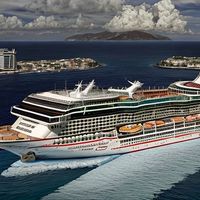
Reveling in the sun-soaked landscapes south of the border may come with a heftier price tag for cruise ship visitors to Mexico starting next year. The Mexican government is set to introduce a $42 immigration surcharge for each passenger arriving via cruise liners.
According to the Associated Press, this fee will be levied on all passengers, irrespective of whether they choose to disembark or remain aboard the vessel. The new legislation mandates that Mexico's Immigration Institute will issue a "group visa to every individual on the ship's manifest." This development has raised concerns among several tourism organizations.
When combined with a $5 per passenger fee imposed by local governments, Mexican ports could become some of the costliest destinations globally, as per the Mexican Association of Naval Agents (AMANAC). In a public statement, the association implored the government to reconsider the rollout of this charge, cautioning that it could diminish the competitiveness of Mexico's cruise industry against more affordable Caribbean alternatives.
Currently, passengers on cruise ships are exempt from immigration fees in Mexico, as they are categorized as being "in transit." The recently approved fee, which has been endorsed by both houses of the Mexican Congress, allocates two-thirds of the revenue to support the Mexican military. The new surcharge is slated to commence on January 1, providing scant time for tourists to accommodate this additional expenditure.
AMANAC has warned in a release that "Mexico could witness a loss of up to 10 million passengers and over 3,300 ship visits in 2025" should the fee be enforced. Mexican President Claudia Sheinbaum has defended the surcharge, asserting that it is not a novel tax but rather an adjustment to existing levies that are indexed to inflation. She also mentioned that ongoing dialogues are taking place among the various agencies that will be impacted by the fee.
Michele Paige, Chief Executive Officer of the Florida-Caribbean Cruise Association—a trade organization representing vessels sailing in the United States, Latin America, and the Caribbean—indicated that most cruises scheduled for 2025 have already been fully paid for, and companies may be disinclined to direct their passengers to locations that impose unanticipated charges. “We acknowledge President Sheinbaum’s assurance during her December 4 press conference that the transition will be gradual and that she has directed federal officials to collaborate with our sector, but thus far, we have not received any communication,” Paige stated in a press release sent on Thursday.
Sergio Gonzales Rubiera, President of The Travel Agents Association in Cozumel, Mexico’s principal cruise destination and one of the world’s most frequented ports, is not overly concerned about the new fee. He suggested that while some cruise lines might opt to bypass Mexican ports in protest, the majority are likely to incorporate the fee into the cost of future voyages. His primary lament is that the federal government will retain the majority of the funds instead of channeling them towards assisting local communities. Former President Andres Manuel Lopez Obrador has expanded the role of the Mexican armed forces, which now oversee the construction of numerous infrastructure projects, including El Tren Maya—a network of new railway routes linking several tourist hotspots in southeastern Mexico.
As the Mexican government prepares to implement the new immigration fee for cruise ship passengers, the potential repercussions for the tourism industry are a topic of heated debate. The $42 charge, which is set to be applied to every passenger on a cruise ship that makes a stop in Mexico, has sparked a wave of apprehension among tourism stakeholders. This fee, which is independent of whether passengers decide to set foot on Mexican soil or remain on board, is expected to be issued as a collective visa by Mexico’s Immigration Institute for all individuals listed on the ship’s manifest.
The introduction of this fee, coupled with an additional $5 fee levied by local states, could position Mexican destinations as some of the priciest in the global tourism market, according to the Mexican Association of Naval Agents (AMANAC). In an official statement, AMANAC has urged the government to re-evaluate the implementation of this charge, warning that it could negatively impact Mexico’s competitiveness against other Caribbean destinations that are more cost-effective for visitors. Currently, cruise ship passengers are not required to pay Mexico’s immigration fees, as they are considered to be in transit.
The fee, which has been approved by both chambers of the Mexican Congress, is designed to allocate two-thirds of the revenue to finance the Mexican army. With the new charge set to take effect on January 1, there is limited time for tourists to adapt to this additional cost. AMANAC has warned in a release that "Mexico could lose up to 10 million passengers and more than 3,300 ship calls in 2025" if the fee is implemented. Mexican President Claudia Sheinbaum has defended the fee, insisting it is not a new tax but is only an adjustment to existing charges that she said are tied to inflation. She also mentioned that ongoing dialogues are taking place among the various agencies that will be impacted by the fee.
Michele Paige, CEO of the Florida-Caribbean Cruise Association, a trade group representing vessels operating in the United States, Latin America, and the Caribbean, says that most of the cruises booked for 2025 are already paid for and the companies might be reluctant to take their passengers to places that impose unexpected fees. “We appreciate President Sheinbaum’s assurance during her Wednesday [December 4] news conference that the change will happen slowly and that she’s instructed federal officials to work with our industry, but we haven’t heard from anyone yet,” said Paige in a news release sent on Thursday.
Sergio Gonzales Rubiera, President of The Travel Agents Association in Cozumel, Mexico’s main cruise destination and one of the most visited ports in the world, is not yet alarmed over the new fee. He says that some cruise lines might skip Mexican ports in protest, but he thinks most will include the fee in the price of future trips. What he laments is that the federal government will keep most of the money instead of helping local communities.
Former President Andres Manuel Lopez Obrador expanded the role of the Mexican armed forces that now oversee the construction of many infrastructure projects such as El Tren Maya, a series of new train routes connecting some of southeastern Mexico’s tourist destinations.
By John Smith/Dec 12, 2024

By Olivia Reed/Dec 12, 2024

By Michael Brown/Dec 12, 2024

By Amanda Phillips/Dec 12, 2024

By Lily Simpson/Dec 12, 2024

By Benjamin Evans/Dec 12, 2024

By Emma Thompson/Dec 12, 2024

By Michael Brown/Dec 12, 2024

By Thomas Roberts/Dec 12, 2024

By Elizabeth Taylor/Dec 12, 2024

By Michael Brown/Dec 2, 2024

By Sarah Davis/Dec 2, 2024

By George Bailey/Dec 2, 2024

By Joshua Howard/Dec 2, 2024

By James Moore/Dec 2, 2024
By Victoria Gonzalez/Dec 2, 2024

By Emily Johnson/Dec 2, 2024

By Daniel Scott/Dec 2, 2024

By Emma Thompson/Dec 2, 2024

By Benjamin Evans/Dec 2, 2024