Europe's mainland, particularly its northern reaches, exudes a festive allure that is unmatched. The wintry weather and Gothic architecture create an ambiance that is perfect for those yearning for a quintessential winter escape. Here are some of the European destinations that celebrate Christmas with unparalleled enthusiasm. Vienna, the picturesque capital of Austria, radiates holiday spirit as the year draws to a close.
The towering Christmas tree and the well-known Christmas market outside the majestic Rathaus, Vienna's City Hall, are must-see attractions. However, the Spittelberg market adds an extra layer of festive delight. This market, nestled in the streets of the Biedermeier Quarter, offers exquisite handcrafted items and hand-knitted sweaters. Visitors can savor a warm gluhwein while strolling leisurely, admiring the architecture that seems perfectly suited for the holiday season.
Hallstatt, a town on the banks of Hallstätter See and surrounded by towering Alpine peaks, enjoys UNESCO protection due to its stunning landscape. The 16th-century townhouses, narrow lanes, and the near-certainty of snow at Christmastime make it an ideal location for immersing oneself in the holiday spirit. Hallstatt's Christmas market, centered around the Market Square, is legendary. Imagine a brightly lit tree, a nativity scene crafted by local woodworkers, and stalls selling ornaments, handiworks, and mulled wine, and you begin to grasp the uniqueness of this place.
Tromso, known as a cultural hub, is home to the stunning Arctic Cathedral, which hosts regular concerts and events. However, it is during the festive season, when the city above the Arctic Circle experiences polar night, that Tromso truly comes alive. The streets are adorned with lights, and Christmas market stalls are scattered throughout, including next to Macks Ølbryggeri, the world's northernmost brewery. Visitors can enjoy a beer or hot chocolate from Rakettkiosken on the main square, warmed by a fire pit, before taking a cable car ride above the city to witness the aurora borealis, or northern lights.
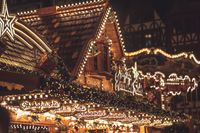
Europe is replete with enchanting Christmas markets, but few can match the fairytale setting and imagination captured by Colmar in France's Alsace region. The city boasts no fewer than six themed markets in the city center, connected by illuminated streets where cozy wooden chalets are tightly packed. The result is truly extraordinary. On Wednesdays and Saturdays around 5 p.m., a children's choir performs on the Petite Venise canal, singing carols and adding to the holiday cheer.
Rudesheim am Rhine, situated in the heart of the Rhine Valley's wine country, is a popular destination all year round. However, as the nights grow longer and Christmas approaches, the town, easily accessible from Frankfurt by boat or train, takes on a special atmosphere. Those arriving by riverboat can use the free shuttle to the Christmas Market of Nations, filled with stalls offering gifts and traditional festive dishes from around the world. The town's medieval structures and alleys maintain a classic holiday feel. Sipping a Rudesheimer coffee, made with whipped cream, shaved chocolate, and brandy, is an excellent way to ward off the cold.
Bruges, once a vital trading center, has a UNESCO-protected medieval center filled with buildings that resemble gingerbread houses when adorned with festive lights. The annual Winter Glow festival transforms the city into a grand celebration. The event features two Christmas markets, a light trail, and a floating ice rink on Minnewater, the Lake of Love. Visitors should indulge in a delicious Belgian hot chocolate paired with a waffle to fully embrace the season's spirit.
Gothenburg, Sweden's ultimate Christmas city, offers a plethora of festive surprises for those willing to venture north and endure the Scandinavian cold. The Liseberg Christmas Market is a highlight, set in an amusement park that celebrated its centenary in 2023. Visitors can enjoy rides and taste delicacies from across Sweden, including pickled herring, reindeer prepared by indigenous reindeer herders, and glögg spiced wine. The city's three-kilometer Lane of Lights, stretching from Liseberg to the harbor, is also worth exploring. On December 13, visitors can witness the traditional St. Lucia concerts during Luciatåg, when locals dress in white robes and celebrate the day of the Catholic saint, symbolizing light in the darkness, inspired by winter solstice celebrations.
Valkenburg, in the southern Netherlands, offers the usual European Christmas charms, but with a twist—all can be found underground. The town's Christmas Caves have gained international fame, featuring a variety of stalls selling festive gifts and decorations. The larger Municipality Cave houses one of Europe's largest indoor Christmas markets, while the Velvet Cave, dating back to the 11th or 12th century, was once a mine for the stone used to build Valkenburg's castle and served as a shelter during World War II.
Rovaniemi, located in Finnish Lapland, is a wonder for many reasons. The town boasts dazzling displays of the northern lights, the traditions of the indigenous Sámi people, and easy access to Finland's renowned sauna culture. However, as the year ends, Rovaniemi revels in its status as the home of Santa Claus. While visitors can visit Rovaniemi's Santa Claus village year-round, the combination of snow and the town's festive spirit as Christmas approaches makes the experience even more magical.
Wrocław, one of Poland's most beautiful cities, elevates its charm at Christmas. The city's Christmas market, spread across Plac Solny and Market Square, features over 250 stalls, a superb fair, and twinkling light installations. The architecture, with its Gothic structures, captures the Christmas spirit, allowing everyone to tap into the special feeling that only comes around this time of year.
The striking architecture of this quintessential German town in Bavaria gives it a Christmas feel no matter when you visit. However, the annual Reiterlesmarkt is what truly sets it apart. The "Reiterle," or little horseback rider, is a mythical figure said to have visited the town during winter for millennia. His arrival is part of the local Christmas tradition, hence the market's name. The result is a fantastical space that celebrates its history and the simple pleasures of hearty food and warm alcohol.
At his Parisian bakery, pastry artisan Arnaud Delmontel meticulously prepares the dough for croissants and chocolate-filled pastries, which later emerge from the oven with a golden hue and an enticing aroma. However, the cost of butter, a crucial ingredient in these delicacies, has seen a significant increase in recent months, with a 25% surge since September alone, according to Delmontel.
Despite this, he remains steadfast in his commitment to using butter, unlike some of his peers who have opted for margarine in their pastries. "It's a distortion of what a croissant is," Delmontel asserts. "A croissant is made with butter."
The simple delight of butter on warm bread or its rich flavor enhancing cakes and meats has become more expensive across Europe over the past year. This increase in butter prices is yet another challenge for consumers looking to bake holiday treats, following a period of post-pandemic inflation exacerbated by the conflict in Ukraine.
Across the 27-member European Union, the average price of butter increased by 19% from October 2023 to October 2024, with particularly sharp increases of 49% in Slovakia, and 40% in Germany and the Czech Republic, as reported to The Associated Press by the EU's executive branch. Individual country reports indicate that these costs have continued to rise in the months since.
In Germany, a 250-gram block of butter now typically retails for between 2.40 and 4 euros, or approximately $2.49 to $4.15, depending on the brand and quality. The price hike is attributed to a global milk shortage resulting from reduced production, including in the United States and New Zealand, one of the world's leading butter exporters, according to economist Mariusz Dziwulski, a food and agricultural market analyst at PKO Bank Polski in Warsaw.
European butter typically has a higher fat content compared to its American counterpart and is sold by weight in standard sizes, making it impossible for food producers to mask price increases by reducing package sizes—a practice known as "shrinkflation."
The butter shortage in France during the 19th century led to the invention of margarine, but the French remain among the continent's most avid consumers of butter, incorporating it generously in baked goods and sauces. In Poland, butter is so important that the government maintains a strategic reserve, alongside national gas and COVID-19 vaccines. The government recently announced the release of approximately 1,000 tons of frozen butter to stabilize prices.
The price of butter in Poland rose by 11.4% between early November and early December, and by 49.2% over the past year to nearly 37 Polish zlotys, or about $9 per kilogram, according to the National Support Center for Agriculture, a government agency. "Every month butter gets more expensive," remarked Danuta Osinska, a 77-year-old Polish woman, while shopping at a discount grocery store in Warsaw. She and her husband are fond of butter in various dishes but struggle to afford it on their modest pensions, leading them to consume less butter and more margarine, despite the inferior taste.
The rising cost of butter in Poland has become a political issue, with presidential elections scheduled for next year. Critics of centrist Prime Minister Donald Tusk and his Civic Platform party are attempting to attribute blame to them. Other Poles point fingers at the national bank's governor, who is from a different political faction. Some consumers base their shopping decisions on butter prices, leading to price wars between grocery chains that have, in some instances, kept prices artificially low in the past, to the detriment of dairy farmers, according to Agnieszka Maliszewska, director of the Polish Chamber of Milk.
Maliszewska believes that domestic, EU-specific, and global factors contribute to butter inflation. She argues that the primary cause in Poland is a shortage of milk fat due to dairy farmers closing their businesses because of slim profit margins and the hard work involved. Other factors cited include increased energy costs due to Russia's war in Ukraine, which impacts milk production. There is some debate about the potential impact of climate change, with Maliszewska not seeing a connection. However, economist Dziwulski suggests that droughts may be reducing production and that falling milk prices last year discouraged investments, leading dairy producers in the EU to produce more cheese for better profitability.
An outbreak of bluetongue disease, a viral disease transmitted by insects and harmless to humans but potentially fatal for sheep, cows, and goats, may also play a role, according to Dziwulski. The U.S. experienced a butter price spike in 2022, with the average price jumping 33% to $4.88 per pound over the course of the year, as dairy farmers grappled with feed costs and hot temperatures. U.S. butter prices fell in 2023 before rising again this year, reaching a peak of $5 per pound in September. Higher grocery prices in general affected U.S. voters during the presidential election in November.
Southern European countries, which rely more heavily on olive oil, are less affected by butter inflation—or perhaps they simply do not consider it as significant since their consumption is much lower. Since last year, the cost of butter has increased by 44% on average in Italy, according to dairy market analysis firm CLAL. Italy is Europe's seventh-largest butter producer, but olive oil is the preferred fat, even for some desserts, so the price of butter does not cause the same level of concern as it does in parts of Europe where butter is more popular.
Delmontel, the Parisian pastry chef, notes that the rising costs put pressure on business owners like himself. In addition to refusing to substitute margarine for butter and not reducing the size of his croissants, some other French bakers are making smaller pastries to manage costs. "Or else you squeeze it out of your profit margin," Delmontel said.

By John Smith/Dec 12, 2024

By Olivia Reed/Dec 12, 2024

By Michael Brown/Dec 12, 2024

By Amanda Phillips/Dec 12, 2024

By Lily Simpson/Dec 12, 2024
By Benjamin Evans/Dec 12, 2024

By Emma Thompson/Dec 12, 2024

By Michael Brown/Dec 12, 2024

By Thomas Roberts/Dec 12, 2024

By Elizabeth Taylor/Dec 12, 2024

By Michael Brown/Dec 2, 2024

By Sarah Davis/Dec 2, 2024

By George Bailey/Dec 2, 2024

By Joshua Howard/Dec 2, 2024

By James Moore/Dec 2, 2024

By Victoria Gonzalez/Dec 2, 2024
By Emily Johnson/Dec 2, 2024

By Daniel Scott/Dec 2, 2024
By Emma Thompson/Dec 2, 2024

By Benjamin Evans/Dec 2, 2024