Democracy has ancient roots, and the Lycians, who once governed the southwest region of present-day Turkey, were no strangers to this form of governance. Two millennia ago, they established a democratic federation that would later influence the political framework of the United States. Amidst the current global challenges faced by democracies, a different legacy of the Lycians endures in the Mediterranean—a legacy centered on the concept of death.
A drive along the coast reveals the proximity of the deceased to the living, with the Lycians' elaborate tombs etched into cliffs, overlooking towns, valleys, and the sea. These are not the only remnants; grand sarcophagi, likely housing the remains of Lycia's elite, are scattered across the landscape, often seamlessly integrated into the urban environment. For history enthusiasts, seeking out these monuments is an adventure that requires a mix of exploration and historical curiosity. While some tombs are preserved within ticketed archaeological sites, others are open to the public, demanding a level of determination and skill akin to that of an Indiana Jones to uncover.
A suitable starting point for this journey is Fethiye, a laid-back port city that serves as a gateway to the beaches and attractions along Turkey's Turquoise Coast. After a day basking in the region's renowned waters, a visit to the cliffs at sunset is a must. Above the city, once known as Telmessos to the Lycians, and with a panoramic view of the Aegean Sea as the day's final light fades, lie the Aminthas Rock Tombs.
These 4th century BCE carved portals require a small entrance fee of three euros, offering a chance to climb to the main tomb, adorned with Greek-style columns. Though the tomb itself was looted long ago, the view and the proximity to such an ancient site are rewards in themselves. It has become a popular spot for selfies, with some visitors waiting until closing time to capture a photo without the crowds. However, its slightly off-the-beaten-path location means it remains uncrowded, even during the most enchanting hours.
Little is known about the tomb's occupant, Aminthas, other than his relation to Hermapias. The Lycians' death rites remain a mystery. Did these elevated resting places symbolize proximity to the heavens or distance from the underworld? According to local lore, as shared by guide Önder Uğuz, the Lycians placed their dead in cliff crevices or beach tombs to be carried to the afterlife by a winged, siren-like creature. However, no archaeological evidence supports this claim. The mystery deepens, as noted by Catherine Draycott, an associate professor of archaeology at Durham University in the UK, who has studied the Lycian cliff tombs, sarcophagi, and the rare pillar tombs. The Lycians inhabited the region for centuries, developing their funerary monuments from the 5th century BCE, during a time when the area was under Greek, Roman, and Persian control or influence. These tombs are among the few physical remnants of the Lycian civilization.
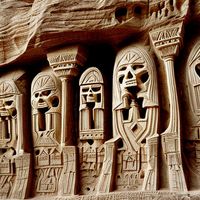
Draycott suggests that while some speculate the Lycians had an obsession with death, much of our understanding of their beliefs is speculative. "We can hypothesize that there might be economic status differences among those who commissioned the tombs, but that is not confirmed. The visibility of the tombs is clearly significant, not just their location on a road, but their prominence from a distance. Do we know why? No." More impressive rock-cut tombs can be found northwest of Fethiye, near Dalyan, and several other sites to the south and east, including the ancient city of Myra, near the modern Turkish town of Demre. Here, the cliffside necropolis looms over what later became a prosperous Roman city, with a theater whose ruins still stand today. Visitors can enter the ground-level tombs, but those higher up, adorned with intricate carvings, are inaccessible.
The cliff tombs share a commonality with the unique pillar tombs found at the inland Lycian site of Xanthos: the elevation of the deceased towards the sky. The significance of this practice remains speculative, as Draycott points out. "We cannot determine if there is a connection between Lycian beliefs and sky gods," she says, noting that ancient death traditions from the Mediterranean Levant region were more focused on Chthonic spirits believed to reside underground.
"The tombs certainly suggest a preference for not being buried and a desire to be elevated—but it is unclear if those buried higher had any advantage, although one could argue that their status was greater in terms of tomb competition, as they would have needed to transport their masons to such heights." Draycott theorizes that tombs on pillars might have been a form of community building, using ancestor worship to create myths and genealogical loyalty to foster a more cohesive society during times of unrest.
While many of the main Lycian burial sites are designed to be prominent parts of the cityscape, the sheer number of tombs scattered throughout the region means that some have become part of the natural landscape. This is why one might see cars casually driving past a sarcophagus in the middle of the road at Fethiye or find one stuck in a traffic circle in the coastal resort town of Kaş. There's also a rock-carved tomb, seemingly ignored, next to a capsicum farm, miles from any settlement. Kaş, another jewel of the Turquoise Coast, is a tourist town where pleasant evenings are spent wandering through lanes of boutique shops (and tombs) and moving between open-air bars and restaurants along the bustling harbor.
For those seeking adventure before donning their finest attire, a trip to the hill behind Lykia Cadesi is recommended. There, almost hidden by flowering shrubs, a sign for "Lycian rock tombs" points up a steep staircase. The steps lead to one tomb, with more hidden further up the cliff for those willing to scramble up daunting rock faces. While not requiring expert climbing skills, a head for heights and strong nerves are beneficial. This location offers spectacular views at sunset, with panoramic vistas over Kaş and beyond to the Aegean. However, it is advised not to delay the descent until it gets too dark.
The region offers numerous less strenuous Lycian tomb explorations. Along the coast between Kaş and Demre lies the village of Kaleüçağız, where regular boat tours depart to view the nearby ruins of a sunken ancient Greek city and also visit a Lycian tomb standing in water. Kaleüçağız also has other Lycian treasures. A short walk along a rugged track heading east out of the village leads to Theimussa Ancient City, a collection of colossal sarcophagi amidst giant boulders, overlooking the nearby bay.
The size of these stone tombs and their heavy lids, as Draycott explains, is an indication of the status of those interred within. "It would have been a significant undertaking," she says, "Those lids weigh tons." Despite the rich history available at Theimussa, it remains a tranquil spot, with a high likelihood of having it to oneself, as most visitors are drawn to the sunken city. A towel can be brought for a quiet solo swim to admire the tombs from the offshore.
Back in Kaleüçağız, more tombs can be found unceremoniously placed in parking lots. While this wealth of history can be astounding for visitors, for locals, these enduring relics of a long-gone civilization can sometimes simply blend into the background. "I don't really care about the historical things," says a young man waiting tables at the family-owned Gönül Cafe on the edge of the village. "I prefer nature and sport."
When considering global holiday hotspots, Thailand stands out as a top destination. Reports indicate that it has already welcomed around 26 million international visitors this year, with 2025 poised to be even more bustling. This Southeast Asian gem is renowned for its picturesque beaches, delectable cuisine, pulsating nightlife, and sacred temples. However, it's also notorious for its crowds. Over time, Thai authorities have attempted to mitigate the impact on its natural wonders by periodically shutting down popular national parks to allow for recovery.
Maya Bay serves as a prime example—closed to tourists in 2018 due to the pressures of overtourism, it underwent an extensive rehabilitation and reopened in 2022. "The area was overwhelmed... that was the epitome of overtourism, affecting water quality and the beach's integrity," recalls Gary Bowerman, a tourism analyst at Check-in Asia, a travel trend research firm. "The environment suffered, litter was rampant, presenting a myriad of issues.
The Thai government saw closure as the only viable solution, using it as a case study to demonstrate the consequences of tourist misbehavior or overcrowding, and the ability to control access." Maya Bay's reopening came with stringent restrictions and continues to observe seasonal closures to alleviate ecological strain—this year, it was inaccessible from August 1 to September 30.
This approach highlights the challenges Thailand faces. Tourism is crucial to the nation's economy, generating roughly $38 billion (1.31 trillion baht) last year, significantly contributing to its GDP. While the Thai government doesn't wish to deter tourists, it has been implementing various strategies to steer visitors towards less frequented locales, alleviating congestion in traditional hotspots like Phuket, Chiang Mai, and Koh Samui. "Thailand's travel sector has a significant opportunity to capitalize on a stronger emphasis on sustainable tourism practices," notes Olivier Ponti, director of intelligence and marketing at travel data firm Forward Keys. "
This shift is not only about reducing environmental impact but also about fostering economic stability and enhancing local community welfare. By encouraging visits to less crowded areas and employing digital tools to manage access to popular destinations, Thailand can more effectively manage overtourism and protect its natural assets." Ponti specifically highlights Nan and Lampang for their unique cultural draws, appealing to those seeking a deeper exploration of Thailand's heritage.
"From our data, international tourist visits to Lampang surged by 102% in the first half of 2024 compared to the same period the previous year," he observes. "This suggests a growing interest in these hidden treasures, likely driven by a desire for more authentic and less congested experiences." Curious about these lesser-known gems? Here are several options to consider as Thailand enters its peak season.
Nestled in northern Thailand, a short drive from Chiang Mai, Chiang Dao offers a serene escape for those craving breathtaking vistas and a dash of adventure. It boasts the nation's third-highest peak, thermal springs, and local markets brimming with regional wares such as hill tribe textiles and bamboo crafts. The quaint town of Chiang Dao itself provides an authentic, local Thai experience. The region is a trekking paradise, with tour operators offering multi-day expeditions into the surrounding mountains. The area's most celebrated attraction is the Chiang Dao Cave complex (Tham Chiang Dao), a network of numerous caverns, some adorned with Buddha statues and illuminated for visitors.
On Thailand's southeastern coast in Nakhon Si Thammarat province, Khanom is perfect for those seeking a laid-back, unspoiled holiday replete with pristine beaches, charming fishing villages, and spectacular vistas. Visitors to Khanom are likely to encounter pink dolphin statues—a nod to the area's key attraction of dolphin spotting, with boat tours available for closer encounters with these marine mammals.
While in Khanom, it's worth sampling khao yam, a regional specialty. This flavorful dish features rice as its base, complemented by a medley of herbs, vegetables, fish sauce, dried shrimp, coconut, fresh lime juice, and chilies. An added benefit: Khanom's proximity to the ferry port at Don Sak, which serves the popular islands of Koh Phangan and Koh Samui, makes it a convenient detour for travelers en route to or from these islands.
Koh Kood, also known as Koh Kut, is an island in Thailand's eastern region near the Cambodian border and is highly regarded by those in the know as a "must-visit" destination. For travelers seeking stunning beaches—Klong Chao Beach and Bang Bao Beach are standouts—snorkeling adventures, hiking, waterfalls, and a relaxed atmosphere, this destination should be on their radar.
Access to this idyllic paradise with clear waters and soft white sands requires a ferry or speedboat from Laem Sok Pier on the mainland, in Trat province, unless staying at the luxury resort Soneva Kiri, which offers direct flights from Bangkok. Most resorts on the island have limited capacity, so advance booking is essential, particularly during peak season.
Nan, another destination favored by Thai tourists and relatively unknown to foreign visitors, is worth a visit for two or three nights. This tranquil town in the province of the same name offers outdoor adventures, striking temples, and a diverse range of accommodations and cuisine, including khao kan chin—a fragrant and savory northern Thai dish combining rice with minced pork, pork blood, and spices.
Doi Phu Kha, a national park featuring caves, waterfalls, mountain vistas, and forests, is among the province's highlights, making it an ideal destination for hikers and adventure seekers. In terms of temples, Wat Phumin is Nan's most renowned, dating back over 400 years and featuring a unique mural that took more than two decades to complete, with its most famous scene depicting a flirtatious Thai couple. For those seeking hilltop temples, Wat Phra That Khao Noi is a must-visit. This 15th-century religious site showcases a golden walking Buddha statue at the center of its terrace. For the ultimate experience, arrive at sunset to enjoy the panoramic views of the town and its environs.
The city of Lampang, capital of Lampang province, is a 90-minute drive from downtown Chiang Mai in northern Thailand and merits at least a two-night stay. While wandering along Thalart Gao Road, tourists can admire historical buildings, including Ban Sao Nak, a Lanna-style teak wood house built in 1895, known for its 116 pillars. Visitors can also stroll through the city center on the south side of the Wang River and along Sri-Kird Road to encounter street art celebrating the city's culture. In the 1950s, entrepreneurs in this district established several kitchenware factories that produced rice bowls adorned with rooster designs—a symbol of good fortune and diligence.
Today, tourists can still savor piping hot bowls of noodles served in Lampang's iconic rooster bowls, available throughout Thailand. Meanwhile, Wat Phra That Lampang Luang is a must-see for those intrigued by distinctive architecture and religious sites. This ancient Buddhist temple, dating to 1476, is one of the oldest standing wooden structures in Thailand. Tourists eager to explore more religious sites can also visit temples Wat Si Rongmuang, Wat Chiang Rai, Wat Kaew Don Tao Suchadaram, Wat Pong Sanuk Nua, and Baan Sao Nak, where they'll encounter glittering gemstones, striking golden details, shrines, dragon motifs, and white elephant statues. For a truly unique experience, the mountaintop pagodas of Wat Chaloem Phra Kiet, located in Chae Hom district an hour from downtown Lampang, are well worth the journey.

By John Smith/Dec 12, 2024

By Olivia Reed/Dec 12, 2024
By Michael Brown/Dec 12, 2024

By Amanda Phillips/Dec 12, 2024

By Lily Simpson/Dec 12, 2024

By Benjamin Evans/Dec 12, 2024
By Emma Thompson/Dec 12, 2024

By Michael Brown/Dec 12, 2024

By Thomas Roberts/Dec 12, 2024

By Elizabeth Taylor/Dec 12, 2024

By Michael Brown/Dec 2, 2024

By Sarah Davis/Dec 2, 2024

By George Bailey/Dec 2, 2024
By Joshua Howard/Dec 2, 2024

By James Moore/Dec 2, 2024
By Victoria Gonzalez/Dec 2, 2024

By Emily Johnson/Dec 2, 2024

By Daniel Scott/Dec 2, 2024

By Emma Thompson/Dec 2, 2024

By Benjamin Evans/Dec 2, 2024