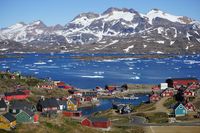
For many, the mere mention of Greenland conjures images of biting cold, endless snow, and a sense of isolation. While the frigid temperatures and pristine snowscapes are likely to remain constants, the perception of remoteness is about to be transformed. As of November 28, the inauguration of a new international airport in the capital city of Nuuk marks a significant shift, making Greenland more accessible than ever before.
This state-of-the-art facility, featuring a 2,200-meter (7,217-foot) runway, will pave the way for larger aircraft to bridge the Arctic region with the rest of the globe. United Airlines is set to commence nonstop seasonal flights from Newark, New Jersey, in June, with travel time expected to be just over four hours. This development is anticipated to boost the annual influx of visitors, which currently stands at 130,000, arriving via cruise ships or flights. Officials are cautiously optimistic about the growth in tourism, aiming to manage the increase without compromising the region's charm.
Prior to the new airport's debut, air travel to Greenland involved landing in smaller cities such as Kangerlussuaq to the north or Narsarsuaq in the south. Both locations, former US military bases from World War II, have the infrastructure to handle larger aircraft. The new airport in Nuuk is poised to become the hub for Air Greenland, which will operate an Airbus A330neo on a route to Copenhagen, Denmark, capable of accommodating 800 passengers per hour. Additionally, flights will connect Nuuk with Reykjavik, Iceland, further enhancing connectivity.
Jens Lauridsen, the CEO of Greenland Airports, is well aware of the profound impact the new airport will have on both tourism and the local economy. He estimates that each flight will contribute approximately $200,000 to Greenland's economy. Lauridsen emphasizes that visitors should not expect a typical tourist experience in Greenland, stating, "We're located in the Arctic," and that visitors are "in for an adventure when you come here."
Qupanuk Olsen, known as Greenland's most prominent content creator with over 400,000 followers on her YouTube channel Q's Greenland, is eagerly looking forward to the new airport's opening. She plans to be on the inaugural flight landing at the new Nuuk International Airport and expresses her excitement, saying, "I'm very excited about it. I'm so excited that I'm going to be on the first flight landing on the new airstrip... it's going to be amazing."
Anne Nivíka Grødem, CEO of the tourism organization Visit Greenland, views the new airport as a milestone that will not only boost tourism but also have a broader societal impact. She believes that "tourism can drive meaningful change" and emphasizes the importance of "finding the balance between local opportunities, market trends, and human aspirations." Two additional airports are slated to open by the end of 2026, further connecting Ilulissat in the north and Qaqortoq in the south, significantly improving intra-Greenland travel options. In a country with a mere 56 miles (90 kilometers) of paved roads, air travel and boats remain the primary means of transportation to other destinations within Greenland.
Grødem encapsulates the essence of Greenland as a travel destination, stating, "Greenland is not just a destination; it's an experience that changes how you see the world." She encourages visitors to approach their journey with an open mind and a spirit of adventure, highlighting that the country's tranquil and contemplative culture offers a unique opportunity to reconnect with nature and oneself.
The new international airport in Nuuk is more than just a transportation hub; it is a gateway to a world of unparalleled natural beauty and cultural experiences. It represents a significant step forward in making Greenland a more accessible destination for travelers seeking the extraordinary. With the ability to handle larger aircraft and increased passenger capacity, the airport is set to become a catalyst for economic growth and a driver of sustainable tourism. It is an investment in the future, one that promises to bring the world closer to Greenland and Greenland closer to the world.
As the first flights take to the skies from Nuuk International Airport, they will not only carry passengers but also the hopes and dreams of a nation looking to share its unique treasures with the world. The opening of the airport is a testament to the resilience and ambition of the Greenlandic people, who are eager to welcome visitors and showcase their homeland's unparalleled offerings. It is an invitation to explore, to learn, and to be transformed by the experience of visiting Greenland.
The impact of the new airport will be felt across various sectors, from tourism to trade, as it facilitates easier access to Greenland's rich resources and opens up new opportunities for collaboration and exchange. It is a symbol of progress and a beacon of hope for the future, signaling the beginning of a new chapter in Greenland's story.
In conclusion, the inauguration of the new international airport in Nuuk is a momentous occasion for Greenland and the world. It is an event that will reshape the way we perceive and interact with this remote yet enchanting part of the planet. As the first larger planes touch down in Nuuk, they will mark not just the arrival of passengers but also the beginning of a new era of connection, understanding, and appreciation for the wonders that Greenland has to offer.
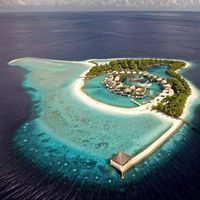
Nestled amidst the azure waters of the Indian Ocean, the Maldives is renowned for its pristine white-sand beaches and vibrant coral reefs, attracting luxury-seekers from around the globe. However, the cost of bidding this paradise farewell has just surged. As of December 1st, the exit fees for passengers departing the Maldives by air are set to quadruple. The departure tax is tiered according to the class of service on their outbound flight.
For economy class travelers, the fee will rise to $50, up from the previous $30; business class passengers will now pay $120, a leap from $60; first class will incur a $240 charge, up from $90; and private jet fliers will face a hefty $480 per person, more than trebling the previous $120. Importantly, this tax applies uniformly to all non-Maldivian visitors, irrespective of age or nationality, and is not dependent on the flight's duration, meaning the cost remains the same whether one is embarking on a short flight to Delhi or a lengthy journey to London.
The Maldivian Inland Revenue Authority (MIRA) announced these tax hikes in November, explaining that the revenue generated is earmarked for the maintenance and improvement of Velana International Airport (MLE), the nation's principal gateway. Interestingly, many tourists may remain oblivious to these additional charges, as they are typically incorporated into the cost of airline tickets, sparing travelers the need to pay out additional cash at passport control.
Beyond, an innovative all-business-class airline that services the Maldives, has taken proactive steps by posting a notice on its website, urging customers to secure their tickets before November 30th to evade the impending departure tax. Situated off the coast of India, the Maldives is home to a population of approximately 525,000 spread across over 1,000 islands and atolls, with the majority residing in the bustling capital, Malé. Tourism is the nation's most lucrative industry, yet the country grapples with the challenge of reconciling the wealth generated by international high-end tourists with the needs of its citizens.
The Maldives' geographical allure makes it an ideal destination for upscale hospitality brands, as hotels and resorts can effortlessly claim their own secluded island paradise. International hotel chains such as The Ritz Carlton, Six Senses, and St Regis have established a presence in the Maldives, with many rooms and villas commanding prices in the thousands per night. According to the US State Department, the average annual income of a Maldivian citizen is around $12,000, highlighting the stark economic disparity within the nation.
As the Maldives continues to be a magnet for the world's affluent travelers, the recent increase in departure taxes underscores the delicate balance the country must maintain between catering to its high-end clientele and addressing the socio-economic needs of its residents. The new tax regime is a testament to the Maldives' commitment to investing in its infrastructure, specifically the Velana International Airport, which serves as a critical link to the outside world and a gateway for the influx of tourism that sustains the nation's economy.
While the tax hike may seem a small price to pay for the unparalleled experience of the Maldives, it is a reminder that the cost of luxury is not only measured in the price of accommodation and activities but also in the fees that support the country's development. For travelers, the decision to visit the Maldives is not just about seeking a slice of paradise but also about contributing to the economic vitality of the nation and its people.
The Maldives' strategy to increase departure taxes is a calculated move to fund essential services and infrastructure. It is a reminder that even in the most remote and idyllic locations, the realities of governance and economic sustainability cannot be ignored. As the world becomes increasingly interconnected, the Maldives stands as an example of how nations can leverage their unique assets to generate revenue, while also facing the challenges of equitable distribution of wealth and the preservation of their natural environment.
For the Maldivian government, the increased departure tax is a means to an end, a way to ensure that the country can continue to provide world-class facilities and services to its visitors, while also investing in the well-being of its citizens. It is a delicate dance between preserving the allure of the Maldives as a luxury destination and ensuring that the benefits of tourism are felt by all segments of society.
As the world watches, the Maldives' approach to taxation and tourism serves as a case study for other nations grappling with similar issues. It highlights the importance of sustainable tourism practices and the need for transparent revenue allocation that benefits both the environment and the local population. The Maldives' story is one of balancing act, where the pursuit of luxury and the preservation of natural beauty go hand in hand with the quest for economic stability and social equity.
In conclusion, the Maldives' decision to increase departure taxes is a reflection of the complex interplay between tourism, economic development, and social responsibility. It is a reminder that the cost of maintaining a paradise is not just financial but also involves a commitment to sustainable practices and equitable growth. For visitors to the Maldives, the increased tax is a small price to pay for the unparalleled experience and the knowledge that their visit contributes to the ongoing prosperity of this island nation.
By John Smith/Dec 12, 2024

By Olivia Reed/Dec 12, 2024

By Michael Brown/Dec 12, 2024

By Amanda Phillips/Dec 12, 2024

By Lily Simpson/Dec 12, 2024

By Benjamin Evans/Dec 12, 2024

By Emma Thompson/Dec 12, 2024

By Michael Brown/Dec 12, 2024

By Thomas Roberts/Dec 12, 2024

By Elizabeth Taylor/Dec 12, 2024

By Michael Brown/Dec 2, 2024

By Sarah Davis/Dec 2, 2024

By George Bailey/Dec 2, 2024

By Joshua Howard/Dec 2, 2024

By James Moore/Dec 2, 2024
By Victoria Gonzalez/Dec 2, 2024
By Emily Johnson/Dec 2, 2024

By Daniel Scott/Dec 2, 2024

By Emma Thompson/Dec 2, 2024

By Benjamin Evans/Dec 2, 2024