The Dow Jones Industrial Average, a revered market bellwether, has stumbled into its longest losing streak since Jimmy Carter's presidency, a bygone era of disco, flared jeans, and economic malaise. Like a once-mighty boxer now reeling from a flurry of blows, the index fell by 267 points, or 0.6%, on Tuesday, marking the ninth consecutive day of decline.
This streak, a throwback to February 1978, has etched itself into the annals of market history, yet the downturn has been relatively mild, with the Dow only losing 3% over the previous eight trading sessions—a mere blip in the grand scheme of the market's ebbs and flows.
While the Dow has stumbled, other indices have strutted forward, unfazed. The Nasdaq, buoyed by the surge in Big Tech and artificial intelligence, has remained robust, although it too closed lower by approximately 0.32% on Tuesday. The S&P 500, a more diverse basket of stocks, also saw a decline, ending the day down by about 0.39%. It's as if the market is a multifaceted creature, with some parts thriving while others falter.
Keith Lerner, co-chief investment officer and chief market strategist at Truist Advisory Services, remarked on this peculiar situation, noting, "It's a bit unusual. Capital continues to flow into technology stocks. That's the prevailing narrative in this market: AI and technology." Indeed, the allure of cutting-edge tech and the promise of AI-driven innovation have captivated investors, drawing their gaze away from the Dow's struggles.
A significant contributor to the Dow's recent losses has been UnitedHealthcare Group. The insurance giant, a heavyweight in the index, has seen its value diminish by 18% this month. This downturn began following the tragic shooting of UnitedHealthcare CEO Brian Thompson, a shocking event that sent ripples of uncertainty through the market. The stock continued to decline on Monday after President-elect Donald Trump pledged to "eliminate" drug-industry intermediaries, a move that could upend the healthcare landscape and leave investors questioning the future of this sector.
The Dow's losing streak precedes the Federal Reserve's interest rate decision on Wednesday, a momentous event that can send markets into a tizzy. Market participants, like spectators at a high-stakes game, widely anticipate a quarter-point rate cut by the Fed, a move that could inject some life into the economy and ease borrowing costs. However, officials might also indicate a slowdown in the pace of reductions in 2025, a subtle signal that could temper investors' enthusiasm.
Despite these recent setbacks, the blue-chip index has still gained 16% year-to-date, a testament to its resilience and the market's overall optimism. Moreover, the Dow is approximately 1,500 points (3.5%) above its level on Election Day. The markets initially rallied post-election, as investors breathed a sigh of relief that the election was concluded without recounts or legal battles. There has also been considerable excitement surrounding Trump's pledges to reduce bureaucratic hurdles and taxes, a cocktail of promises that has fueled investor optimism.
Lerner further elaborated on the post-election sentiment, saying, "Post-election, investors focused solely on the positive aspects of Trump's policy. Next year, they will have to consider both the positive and negative implications." This statement alludes to the apprehensions about Trump's threats to increase tariff rates and initiate mass deportations, actions that could introduce new headwinds for the market.
According to FactSet data, there has not been a losing streak of 10 days or more since an 11-day decline in 1974. Anthony Saglimbene, chief market strategist at Ameriprise, does not view the Dow's recent losing streak as an omen of impending difficulties. Instead, he suggests that the recent downturn represents some profit-taking following significant gains in recent weeks. There has also been a "slight recalibration of expectations regarding the risks and opportunities associated with the incoming Trump administration next year," Saglimbene said, "and whether a Trump 2.0 policy agenda can stimulate the kind of growth that is currently being factored into stock prices."
In the grand tapestry of market history, the Dow's current dip may well be a fleeting folly, a momentary hiccup in an otherwise strong year. Or perhaps it's a harbinger of fractures to come, a sign that the market's foundation is not as solid as it seems. Only time will tell if this streak is a mere blip or a crack that will widen and deepen, sending shockwaves through the financial world.
For now, investors watch and wait, their eyes darting between the flickering numbers on their screens and the shifting sands of economic and political landscapes. They know that the market, like a wild beast, can be unpredictable and unforgiving. And so, they tread cautiously, ever mindful of the risks and rewards that lie ahead.
The Dow's journey is a winding road, filled with twists and turns, ups and downs. It's a road that has been traveled by generations of investors, each with their own hopes and fears, dreams and nightmares. And as the Dow stumbles and stammers its way forward, it carries with it the weight of those who have come before and the hopes of those who will follow.
In the end, the Dow is more than just a collection of numbers and percentages. It's a mirror, reflecting the hopes and fears of a nation, the ebb and flow of an economy, the triumphs and tribulations of a people. And as it continues on its journey, it will undoubtedly face more challenges, more setbacks, more moments of triumph and despair. But through it all, it remains a beacon, a symbol of the enduring spirit of capitalism and the relentless pursuit of growth and prosperity.
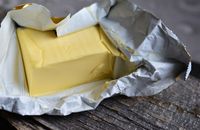
At his Parisian bakery, pastry artisan Arnaud Delmontel meticulously prepares the dough for croissants and chocolate-filled pastries, which later emerge from the oven with a golden hue and an enticing aroma. However, the cost of butter, a crucial ingredient in these delicacies, has seen a significant increase in recent months, with a 25% surge since September alone, according to Delmontel.
Despite this, he remains steadfast in his commitment to using butter, unlike some of his peers who have opted for margarine in their pastries. "It's a distortion of what a croissant is," Delmontel asserts. "A croissant is made with butter."
The simple delight of butter on warm bread or its rich flavor enhancing cakes and meats has become more expensive across Europe over the past year. This increase in butter prices is yet another challenge for consumers looking to bake holiday treats, following a period of post-pandemic inflation exacerbated by the conflict in Ukraine.
Across the 27-member European Union, the average price of butter increased by 19% from October 2023 to October 2024, with particularly sharp increases of 49% in Slovakia, and 40% in Germany and the Czech Republic, as reported to The Associated Press by the EU's executive branch. Individual country reports indicate that these costs have continued to rise in the months since.
In Germany, a 250-gram block of butter now typically retails for between 2.40 and 4 euros, or approximately $2.49 to $4.15, depending on the brand and quality. The price hike is attributed to a global milk shortage resulting from reduced production, including in the United States and New Zealand, one of the world's leading butter exporters, according to economist Mariusz Dziwulski, a food and agricultural market analyst at PKO Bank Polski in Warsaw.
European butter typically has a higher fat content compared to its American counterpart and is sold by weight in standard sizes, making it impossible for food producers to mask price increases by reducing package sizes—a practice known as "shrinkflation."
The butter shortage in France during the 19th century led to the invention of margarine, but the French remain among the continent's most avid consumers of butter, incorporating it generously in baked goods and sauces. In Poland, butter is so important that the government maintains a strategic reserve, alongside national gas and COVID-19 vaccines. The government recently announced the release of approximately 1,000 tons of frozen butter to stabilize prices.
The price of butter in Poland rose by 11.4% between early November and early December, and by 49.2% over the past year to nearly 37 Polish zlotys, or about $9 per kilogram, according to the National Support Center for Agriculture, a government agency. "Every month butter gets more expensive," remarked Danuta Osinska, a 77-year-old Polish woman, while shopping at a discount grocery store in Warsaw. She and her husband are fond of butter in various dishes but struggle to afford it on their modest pensions, leading them to consume less butter and more margarine, despite the inferior taste.
The rising cost of butter in Poland has become a political issue, with presidential elections scheduled for next year. Critics of centrist Prime Minister Donald Tusk and his Civic Platform party are attempting to attribute blame to them. Other Poles point fingers at the national bank's governor, who is from a different political faction. Some consumers base their shopping decisions on butter prices, leading to price wars between grocery chains that have, in some instances, kept prices artificially low in the past, to the detriment of dairy farmers, according to Agnieszka Maliszewska, director of the Polish Chamber of Milk.
Maliszewska believes that domestic, EU-specific, and global factors contribute to butter inflation. She argues that the primary cause in Poland is a shortage of milk fat due to dairy farmers closing their businesses because of slim profit margins and the hard work involved. Other factors cited include increased energy costs due to Russia's war in Ukraine, which impacts milk production. There is some debate about the potential impact of climate change, with Maliszewska not seeing a connection. However, economist Dziwulski suggests that droughts may be reducing production and that falling milk prices last year discouraged investments, leading dairy producers in the EU to produce more cheese for better profitability.
An outbreak of bluetongue disease, a viral disease transmitted by insects and harmless to humans but potentially fatal for sheep, cows, and goats, may also play a role, according to Dziwulski. The U.S. experienced a butter price spike in 2022, with the average price jumping 33% to $4.88 per pound over the course of the year, as dairy farmers grappled with feed costs and hot temperatures. U.S. butter prices fell in 2023 before rising again this year, reaching a peak of $5 per pound in September. Higher grocery prices in general affected U.S. voters during the presidential election in November.
Southern European countries, which rely more heavily on olive oil, are less affected by butter inflation—or perhaps they simply do not consider it as significant since their consumption is much lower. Since last year, the cost of butter has increased by 44% on average in Italy, according to dairy market analysis firm CLAL. Italy is Europe's seventh-largest butter producer, but olive oil is the preferred fat, even for some desserts, so the price of butter does not cause the same level of concern as it does in parts of Europe where butter is more popular.
Delmontel, the Parisian pastry chef, notes that the rising costs put pressure on business owners like himself. In addition to refusing to substitute margarine for butter and not reducing the size of his croissants, some other French bakers are making smaller pastries to manage costs. "Or else you squeeze it out of your profit margin," Delmontel said.
By Laura Wilson/Dec 20, 2024

By Samuel Cooper/Dec 20, 2024

By Daniel Scott/Dec 20, 2024

By Christopher Harris/Dec 20, 2024

By Megan Clark/Dec 20, 2024

By Elizabeth Taylor/Dec 20, 2024

By Ryan Martin/Dec 20, 2024

By Rebecca Stewart/Dec 20, 2024

By David Anderson/Dec 20, 2024

By Samuel Cooper/Dec 20, 2024

By Jessica Lee/Dec 19, 2024

By Joshua Howard/Dec 19, 2024

By Michael Brown/Dec 19, 2024
By Laura Wilson/Dec 19, 2024

By Elizabeth Taylor/Dec 19, 2024

By Ryan Martin/Dec 19, 2024

By Natalie Campbell/Dec 19, 2024

By Samuel Cooper/Dec 19, 2024

By Amanda Phillips/Dec 19, 2024

By Joshua Howard/Dec 19, 2024