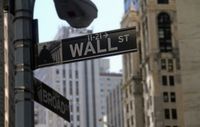
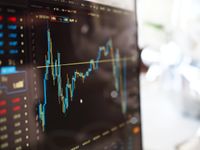
On Wednesday, the Dow Jones Industrial Average took a nosedive, plunging into the abyss of a decade-long losing streak—a record not seen since the Gerald Ford presidency. This plummeting performance extended the index's downward spiral, leaving investors reeling and market watchers scratching their heads. The Dow concluded the trading day with a staggering loss of approximately 1,123 points, or 2.6%, after the Federal Reserve's policy statement sent shockwaves through the financial world.
The Dow Jones Industrial Average, one of the most closely watched barometers of the U.S. stock market, has been in a state of flux recently. This historic decline has captured the attention of investors, economists, and the general public alike, raising questions about the underlying causes and potential implications for the broader economy.
The Fed's outlook was less than stellar, projecting only two interest rate reductions in 2025, a stark contrast to the previously expected four. This shift in expectations, coupled with the central bank's assertion that inflation will remain persistently above its target range for a more extended period than initially anticipated, sent the Dow into a tailspin.
The Federal Reserve, as the central bank of the United States, plays a pivotal role in shaping monetary policy and influencing economic conditions. Its decisions on interest rates, in particular, have far-reaching consequences for borrowing costs, consumer spending, business investment, and ultimately, the stock market.
Investors had eagerly anticipated a quarter-point interest rate cut by the Fed on Wednesday, and the central bank delivered as expected. However, the market's reaction was less than enthusiastic, as the Fed's statement projecting only two rate cuts in 2025 indicated that monetary policy would remain restrictive.
A rate cut typically lowers the cost of borrowing for businesses and consumers, which can stimulate economic activity and boost stock prices. However, when the Fed signals that future rate cuts will be limited, it suggests that the central bank believes the economy is robust enough to withstand higher interest rates, or that inflation remains a significant concern.
Stocks and bonds both declined in response to what Jay Hatfield, CEO and CIO at Infrastructure Capital Advisors, referred to as the Fed's "hawkish cut." The term "hawkish" in monetary policy context implies that the central bank is more focused on combating inflation, even if it means maintaining higher interest rates that could potentially slow economic growth.
The immediate market reaction to the Fed's statement highlights the complex relationship between monetary policy and financial markets. Investors had priced in a 98% probability of a rate cut at the Fed's January meeting. Yet, following Fed Chair Jerome Powell's press conference on Wednesday, traders reassessed this probability, pricing in only a 6% chance of a rate reduction at the next month's meeting, according to fed funds futures data.
The Dow's descent has been particularly influenced by the performance of certain key stocks. UnitedHealth Group, for instance, has seen a 15% decline this month, with the selloff beginning after the tragic shooting of UnitedHealthcare CEO Brian Thompson.
The impact of individual stocks on the Dow Jones Industrial Average underscores the importance of company-specific news and events in shaping market indices. UnitedHealth Group, as a major component of the Dow, carries significant weight in the index's performance.
Interestingly, UnitedHealth's stock price rebounded slightly on Wednesday, rising by about 3.3%. This volatility in UnitedHealth's stock illustrates the complex dynamics at play in the market, where multiple factors can influence stock prices, including leadership changes, corporate news, and broader market trends.
The tragic shooting of UnitedHealthcare CEO Brian Thompson was a shocking event that undoubtedly affected investor sentiment toward the company. However, the subsequent rebound in the stock price may reflect factors such as bargain hunting by investors anticipating a recovery, positive financial results, or other company-specific developments.
Nvidia, the U.S. chipmaker that joined the Dow in November, has also contributed to the index's decline. Despite Nvidia's stock increasing by over 180% this year, it has seen a decline in the past month, down approximately 5%, further impacting the Dow's performance.
Nvidia's significant year-to-date gain reflects the broader trend in the technology sector, where certain companies have experienced substantial growth driven by innovation in artificial intelligence, graphics processing, and other advanced technologies. However, the recent decline highlights the volatility that can occur even among high-performing stocks, influenced by factors such as profit-taking, market sentiment, or changes in industry outlook.
The Dow's extended losing streak harkens back to the dark days of September 20 through October 4, 1974, when the Dow experienced a consecutive 11-session decline. This historical reference provides perspective on the current market conditions, suggesting that while the recent decline is notable, it is not unprecedented in the context of market history.
Market history is replete with periods of volatility and extended declines. The 1974 episode, occurring during a period of economic uncertainty and stagflation, serves as a reminder that markets can experience prolonged downturns in response to adverse economic conditions, policy missteps, or external shocks.
Yet, amidst this turmoil, the Dow's loss of less than 6% is relatively minor compared to other indices that have been at or near record highs before Wednesday's significant drop. The S&P 500 fell by 3%, and the Nasdaq Composite index declined by 3.6%.
This comparative analysis highlights the differing impacts of market movements across various indices, which are composed of different sets of companies and may respond differently to economic news and monetary policy changes. The Dow, being a price-weighted index of 30 large, publicly-owned companies in the United States, can sometimes exhibit different performance characteristics compared to broader indices like the S&P 500 or technology-heavy indices like the Nasdaq Composite.
The global economic landscape is fraught with uncertainty. The ongoing trade tensions between the United States and China, the potential fallout from Brexit, and the lingering effects of the COVID-19 pandemic have all cast a shadow over the market. Investors are understandably cautious, wary of any developments that could further disrupt the fragile recovery.
Economic uncertainty can stem from a multitude of sources, both domestic and international. Trade tensions can lead to tariffs, supply chain disruptions, and retaliatory measures that affect corporate profitability and global growth prospects. Brexit continues to present challenges in terms of regulatory adjustments, market access, and geopolitical relations. The aftermath of the COVID-19 pandemic has left lasting impacts on labor markets, consumer behavior, and business operations worldwide.
The Federal Reserve's monetary policy decisions have a significant impact on the market. As the central bank navigates the delicate balance between fostering economic growth and curbing inflation, its actions can send ripples through the financial world. The recent policy statement, with its revised interest rate projections and inflation outlook, has undoubtedly contributed to the Dow's decline.
The Fed's dual mandate of maximizing employment and stabilizing prices requires a careful balancing act. In periods of high inflation, the central bank may prioritize price stability by raising interest rates to cool down the economy. Conversely, during economic downturns, it may lower rates to stimulate borrowing and investment. The current situation presents a complex scenario where inflation remains above target, yet economic growth shows resilience, prompting the Fed to adopt a cautious approach.
It's important to remember that the market is not solely driven by macroeconomic factors. Company-specific developments, such as the events surrounding UnitedHealth Group, can also have a substantial impact on the performance of indices like the Dow. The interplay between these various factors makes predicting the market's future trajectory a challenging task.
Company-specific news, earnings reports, management changes, and other internal developments can significantly influence stock prices. In the case of UnitedHealth Group, the tragic event involving its CEO introduced an element of uncertainty and risk perception among investors, contributing to the stock's volatility and, by extension, affecting the Dow's performance.
Looking ahead, there are several potential scenarios that could unfold. If the global economy continues to face headwinds, and the Federal Reserve maintains its restrictive monetary policy stance, the Dow may continue to experience turbulence. On the other hand, if economic conditions improve, and the central bank adjusts its policy accordingly, the index could rebound and regain its upward momentum.
The path forward for the financial markets will depend on a multitude of factors, including but not limited to:
- Global economic growth prospects
- Inflation trends and central bank responses
- Geopolitical developments
- Corporate earnings and profitability
- Investor sentiment and risk appetite
The state of the global economy will heavily influence market performance. Indicators such as GDP growth, employment rates, consumer confidence, and industrial production provide insights into the health of the economy. A sustained recovery could bolster investor confidence and support market indices, while a downturn could exacerbate selling pressures.
The trajectory of inflation will be crucial in determining the Federal Reserve's policy path. If inflation shows signs of moderating, the central bank may adopt a more accommodative stance, potentially leading to further rate cuts and supporting market rally. Conversely, persistent high inflation could force the Fed to maintain or even increase rates, dampening market enthusiasm.
Geopolitical events, including trade negotiations, international conflicts, and diplomatic relations, can introduce volatility into the markets. The resolution or escalation of such issues can have significant impacts on specific industries and the broader economy.
Company earnings and financial health are fundamental drivers of stock prices. Strong earnings reports and positive outlooks can boost individual stocks and the indices they comprise, while disappointing results can trigger sell-offs. The technology sector, in particular, has been a significant contributor to market performance in recent years, and its fortunes will continue to be closely watched.
In the meantime, investors must navigate this uncertain terrain, carefully weighing the risks and opportunities presented by the market. For some, this may involve adopting a more defensive stance, focusing on sectors and companies that are less susceptible to economic fluctuations. For others, it may mean seeking out opportunities in areas that stand to benefit from the current economic environment.
Different investment strategies may be appropriate depending on individual risk tolerance, investment horizons, and financial goals. Diversification remains a key principle in portfolio management, helping to mitigate risk by spreading investments across various asset classes and sectors.
Adopting a defensive investment strategy might involve increasing allocations to traditionally stable sectors such as utilities, consumer staples, and healthcare. These sectors tend to be more resilient during economic downturns as demand for their products and services remains relatively constant.
Conversely, opportunistic investors may look for value in sectors that have experienced significant declines, anticipating a rebound when market conditions improve. This approach requires a thorough analysis of individual companies' fundamentals and a willingness to accept higher levels of risk for the potential of greater returns.
Maintaining a long-term perspective is essential for investors navigating short-term market volatility. Historical data suggests that markets tend to recover from downturns over time, rewarding those who remain patient and disciplined in their investment approach.
The Dow's decade-long descent serves as a reminder of the inherent volatility and unpredictability of the market. It highlights the importance of maintaining a long-term perspective and a well-diversified portfolio, as well as the need for investors to stay informed and adaptable in the face of changing economic conditions.
As the market continues to evolve, one thing is certain: the Dow's journey will be closely watched by investors, market watchers, and policymakers alike. Its performance will serve as a barometer of the broader economic landscape, reflecting the hopes, fears, and expectations of those who participate in the financial markets. And as it charts its course through the ups and downs of the market, the Dow will undoubtedly provide valuable insights and lessons for all those who seek to understand the complex and ever-changing world of finance.
For aficionados of coffee who are also intrigued by the enigmatic lifestyle within the world's most isolated nation, a unique opportunity awaits: a Starbucks location that offers a panoramic view of North Korea.
The American coffeehouse chain has opened a new branch in South Korea, situated atop an observation deck near the demarcation line with North Korea, providing visitors with the chance to enjoy their beverages while gazing across the Imjingang River at the elusive neighboring country. This exclusive 30-seat café is nestled within the Aegibong Peace Ecopark in Gimpo city, a mere 20 miles to the north of Seoul, the bustling capital. It is in close proximity to the Korean Demilitarized Zone (DMZ), recognized as one of the most heavily fortified borders globally.
On its inaugural day, November 29, the observation platform outside the café was bustling with patrons eager to experience the novel setting. Those seeking respite from the chill opted to enjoy their coffee indoors. On a day with clear visibility, visitors can catch sight of agricultural lands and modest structures in Kaepung county, just across the border. Armed with a pair of binoculars or a camera equipped with ultra telephoto function, one might even discern individuals walking about.
A local resident, Baek Hea-soon, aged 48, expressed a poignant wish to Reuters: "I wish I could share this tasty coffee with the people living in North Korea right in front of us." Lim Jong-chul, an octogenarian and Vietnam War veteran, was among the first customers and remarked on the transformation of the atmosphere from one of rigid tension to a sense of peace and reassurance with the café's presence.
Technically, North and South Korea remain in a state of war, as a formal peace treaty was never signed to conclude the Korean War that raged from 1950 to 1953. The conflict was temporarily halted with an armistice agreement. Gimpo's Mayor, Kim Byung-soo, highlighted the location's "unique" character, embodying the "charm of Korean culture." Authorities have been capitalizing on the historical importance of the site to invigorate tourism.
The ecopark, which houses the observation tower, was once the battleground of Hill 154, where intense fighting occurred during the war among the two Koreas and their respective allies. Several other observatory towers line the border, offering glimpses into North Korea from a distance. The Starbucks location is one of the few opportunities for South Koreans and international visitors to observe North Korea without physically entering, presenting an alternative to the popular DMZ tours that attract a multitude of tourists annually, as reported by the Korea Tourism Organization.
The café's debut comes amidst a period of heightened tensions between the two Koreas. In January, North Korea's leader, Kim Jong Un, declared that his nation would no longer pursue reconciliation or reunification with South Korea. In October, Kim escalated the rhetoric by threatening to employ nuclear weapons to annihilate South Korea in the event of an attack, following South Korea's president's warning that the use of nuclear arms by the North would lead to the "end of its regime."
This new Starbucks outpost not only serves as a coffee destination but also as a symbol of the complex relationship between the two Koreas. It stands as a beacon of modernity amidst the historical and political backdrop, offering a unique perspective on the divided peninsula. The café's location at the Aegibong Peace Ecopark is a testament to the site's historical significance and its potential to foster peace and understanding through tourism and cultural exchange.
The opening of the café also reflects the growing interest in North Korea among international travelers. Despite the political tensions and the challenges of accessing the country, there is a fascination with the culture and history of North Korea that draws visitors to its borders. The café provides a safe and accessible way for people to engage with the enigmatic nation, even if it's from a distance.
As the world watches the developments between North and South Korea with bated breath, the Starbucks café at the Aegibong Peace Ecopark offers a quiet respite for reflection and conversation. It serves as a reminder of the delicate balance of peace and the ongoing quest for reconciliation in a region that has known too much conflict.
The café's existence also speaks to the resilience of the human spirit and the desire for connection, even in the face of division. It is a place where people can come together over a shared love for coffee and a shared curiosity about the world beyond their borders. In a time when the world seems increasingly divided, the Starbucks café at the border serves as a small but significant step towards understanding and unity.
In conclusion, the new Starbucks café in Gimpo city is more than just a place to enjoy a cup of coffee. It is a window into a world that is often hidden from view, a bridge between two nations divided by history, and a symbol of hope for a future where the borders that separate us become less significant than the connections that unite us. As visitors sip their coffee and gaze across the river, they are reminded of the complexities of the world we live in and the importance of seeking understanding and peace in the face of division.

By Laura Wilson/Dec 20, 2024

By Samuel Cooper/Dec 20, 2024
By Daniel Scott/Dec 20, 2024
By Christopher Harris/Dec 20, 2024

By Megan Clark/Dec 20, 2024
By Elizabeth Taylor/Dec 20, 2024
By Ryan Martin/Dec 20, 2024

By Rebecca Stewart/Dec 20, 2024

By David Anderson/Dec 20, 2024

By Samuel Cooper/Dec 20, 2024
By Jessica Lee/Dec 19, 2024
By Joshua Howard/Dec 19, 2024

By Michael Brown/Dec 19, 2024

By Laura Wilson/Dec 19, 2024

By Elizabeth Taylor/Dec 19, 2024

By Ryan Martin/Dec 19, 2024

By Natalie Campbell/Dec 19, 2024
By Samuel Cooper/Dec 19, 2024

By Amanda Phillips/Dec 19, 2024

By Joshua Howard/Dec 19, 2024