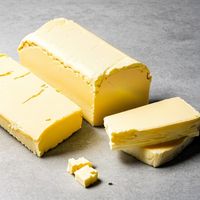
In a move that could be straight out of a culinary-political drama, Poland is gearing up to auction off a substantial chunk of its frozen butter reserves—up to 1,000 metric tons—in a bid to quell the rising prices of this beloved dairy staple. As the nation's presidential elections loom in May, the government's strategic reserves agency announced the butter bonanza on Tuesday, pinning the blame for the price surge on a global milk shortage.
This bold stroke of dairy diplomacy is set to commence on Thursday, with the agency offering unsalted frozen butter in 25-kilogram blocks to businesses at a starting price of 28.38 zlotys (approximately $7) per kilogram—a figure that pales in comparison to the prices consumers are currently shelling out at Biedronka, one of Poland's leading supermarket chains.
The global milk shortage is a key culprit behind the soaring butter prices. Dairy prices have experienced a significant uptick worldwide, with the European Commission reporting a 44% increase in butter prices within the EU this year. The Dairy Price Index published by the United Nations' Food and Agriculture Organization was 20% higher in November than its level from a year ago. Global butter prices have been on an upward trend for the 14th consecutive month, reaching a record high due to robust demand and limited inventories.
This global context has undoubtedly played a role in Poland's butter woes. The nation has not been immune to the broader market forces affecting dairy products. The shortage of milk has been attributed to various factors, including climate change impacting milk yields, rising feed costs for dairy farmers, and logistical challenges in the supply chain. These factors have combined to create a perfect storm, driving up prices for consumers and putting pressure on governments to respond.
However, domestic factors have also contributed to the price surge. Year-on-year inflation in Poland reached 3.9% in November, which is notably higher than the average rate across the European Union. On a national scale, inflation rates were even more pronounced last month, with a 4.7% increase. Although this is significantly lower than the peak of 18.4% recorded in February of the previous year, it remains a concern that affects household spending, according to Rafał Benecki, chief economist at ING Bank Śląski in Poland.
The rising cost of butter has become emblematic of the broader challenges faced by Polish consumers in terms of living expenses. As retail butter prices have risen by around 20% compared to the previous year, and wholesale prices have surged by 50%, consumers may face even higher prices in the future. This has led to a palpable sense of discontent among the populace, with the issue gaining traction in the political arena.
Presidential candidate Rafał Trzaskowski from the ruling party of Prime Minister Donald Tusk has criticized the central bank's handling of inflation and even offered to send the governor butter as evidence, as reported by the Financial Times. Similarly, Jarosław Kaczyński, the leader of the opposition Law and Justice Party, highlighted the butter's high cost by posting a picture of it being stored in a safe, illustrating the overall increase in living costs. These political maneuvers underscore the significance of the butter issue in the upcoming elections.
The timing of the butter auction, just months before the presidential elections, has led to speculation about its political motivations. Some observers suggest that the government is using the auction as a populist measure to gain favor with voters who have been affected by the price increases. By taking action to reduce butter prices, the government may be attempting to demonstrate its responsiveness to citizens' concerns and its ability to manage economic challenges.
Now, let's consider the potential impact of the butter auction on consumers and businesses. By flooding the market with a large quantity of frozen butter, the government aims to increase supply and drive down prices. This could provide temporary relief for consumers, who have been grappling with the escalating cost of this essential item. For businesses, particularly those in the food and hospitality sectors, the auction may offer an opportunity to secure butter at a lower price point, potentially easing some of the financial strain caused by the price hike.
However, it's important to note that the final auction prices could potentially exceed the minimum set price of 28.38 zlotys per kilogram. If this occurs, the price reduction may not be as significant as initially hoped, and consumers may still face higher prices at the checkout. Additionally, the auction's success in stabilizing butter prices will depend on various factors, such as the level of demand from businesses and the ability of the market to absorb the additional supply.
From a broader perspective, the butter auction raises questions about the role of government intervention in the market and the effectiveness of such measures in addressing economic issues. While tapping into emergency reserves can provide short-term relief, it may not address the root causes of the problem. In this case, the global milk shortage and domestic inflationary pressures are the underlying factors driving the price surge. To truly tackle these issues, more comprehensive and long-term solutions are needed.
Governments occasionally utilize their emergency reserves to increase supply and reduce prices, as seen in other instances around the world. For example, China has previously released its strategic pork reserves, and Canada has made its maple syrup reserves available during shortages. These actions highlight the importance of certain commodities in the local diets and economies of these countries. In Poland, the butter auction is a testament to the cultural and economic significance of this dairy staple.
In conclusion, the Polish butter auction is a bold move that captures the imagination and attention of consumers, businesses, and politicians alike. While it may provide temporary relief from the soaring prices, it also serves as a reminder of the deeper economic challenges facing the nation. As the election season unfolds, the outcome of the auction and its impact on the electorate will be closely watched. Whether it proves to be a tasty tactic or a bitter pill for voters, the butter auction has undoubtedly added a dash of intrigue and flavor to Poland's political and economic discourse.
Reveling in the sun-soaked landscapes south of the border may come with a heftier price tag for cruise ship visitors to Mexico starting next year. The Mexican government is set to introduce a $42 immigration surcharge for each passenger arriving via cruise liners.
According to the Associated Press, this fee will be levied on all passengers, irrespective of whether they choose to disembark or remain aboard the vessel. The new legislation mandates that Mexico's Immigration Institute will issue a "group visa to every individual on the ship's manifest." This development has raised concerns among several tourism organizations.
When combined with a $5 per passenger fee imposed by local governments, Mexican ports could become some of the costliest destinations globally, as per the Mexican Association of Naval Agents (AMANAC). In a public statement, the association implored the government to reconsider the rollout of this charge, cautioning that it could diminish the competitiveness of Mexico's cruise industry against more affordable Caribbean alternatives.
Currently, passengers on cruise ships are exempt from immigration fees in Mexico, as they are categorized as being "in transit." The recently approved fee, which has been endorsed by both houses of the Mexican Congress, allocates two-thirds of the revenue to support the Mexican military. The new surcharge is slated to commence on January 1, providing scant time for tourists to accommodate this additional expenditure.
AMANAC has warned in a release that "Mexico could witness a loss of up to 10 million passengers and over 3,300 ship visits in 2025" should the fee be enforced. Mexican President Claudia Sheinbaum has defended the surcharge, asserting that it is not a novel tax but rather an adjustment to existing levies that are indexed to inflation. She also mentioned that ongoing dialogues are taking place among the various agencies that will be impacted by the fee.
Michele Paige, Chief Executive Officer of the Florida-Caribbean Cruise Association—a trade organization representing vessels sailing in the United States, Latin America, and the Caribbean—indicated that most cruises scheduled for 2025 have already been fully paid for, and companies may be disinclined to direct their passengers to locations that impose unanticipated charges. “We acknowledge President Sheinbaum’s assurance during her December 4 press conference that the transition will be gradual and that she has directed federal officials to collaborate with our sector, but thus far, we have not received any communication,” Paige stated in a press release sent on Thursday.
Sergio Gonzales Rubiera, President of The Travel Agents Association in Cozumel, Mexico’s principal cruise destination and one of the world’s most frequented ports, is not overly concerned about the new fee. He suggested that while some cruise lines might opt to bypass Mexican ports in protest, the majority are likely to incorporate the fee into the cost of future voyages. His primary lament is that the federal government will retain the majority of the funds instead of channeling them towards assisting local communities. Former President Andres Manuel Lopez Obrador has expanded the role of the Mexican armed forces, which now oversee the construction of numerous infrastructure projects, including El Tren Maya—a network of new railway routes linking several tourist hotspots in southeastern Mexico.
As the Mexican government prepares to implement the new immigration fee for cruise ship passengers, the potential repercussions for the tourism industry are a topic of heated debate. The $42 charge, which is set to be applied to every passenger on a cruise ship that makes a stop in Mexico, has sparked a wave of apprehension among tourism stakeholders. This fee, which is independent of whether passengers decide to set foot on Mexican soil or remain on board, is expected to be issued as a collective visa by Mexico’s Immigration Institute for all individuals listed on the ship’s manifest.
The introduction of this fee, coupled with an additional $5 fee levied by local states, could position Mexican destinations as some of the priciest in the global tourism market, according to the Mexican Association of Naval Agents (AMANAC). In an official statement, AMANAC has urged the government to re-evaluate the implementation of this charge, warning that it could negatively impact Mexico’s competitiveness against other Caribbean destinations that are more cost-effective for visitors. Currently, cruise ship passengers are not required to pay Mexico’s immigration fees, as they are considered to be in transit.
The fee, which has been approved by both chambers of the Mexican Congress, is designed to allocate two-thirds of the revenue to finance the Mexican army. With the new charge set to take effect on January 1, there is limited time for tourists to adapt to this additional cost. AMANAC has warned in a release that "Mexico could lose up to 10 million passengers and more than 3,300 ship calls in 2025" if the fee is implemented. Mexican President Claudia Sheinbaum has defended the fee, insisting it is not a new tax but is only an adjustment to existing charges that she said are tied to inflation. She also mentioned that ongoing dialogues are taking place among the various agencies that will be impacted by the fee.
Michele Paige, CEO of the Florida-Caribbean Cruise Association, a trade group representing vessels operating in the United States, Latin America, and the Caribbean, says that most of the cruises booked for 2025 are already paid for and the companies might be reluctant to take their passengers to places that impose unexpected fees. “We appreciate President Sheinbaum’s assurance during her Wednesday [December 4] news conference that the change will happen slowly and that she’s instructed federal officials to work with our industry, but we haven’t heard from anyone yet,” said Paige in a news release sent on Thursday.
Sergio Gonzales Rubiera, President of The Travel Agents Association in Cozumel, Mexico’s main cruise destination and one of the most visited ports in the world, is not yet alarmed over the new fee. He says that some cruise lines might skip Mexican ports in protest, but he thinks most will include the fee in the price of future trips. What he laments is that the federal government will keep most of the money instead of helping local communities.
Former President Andres Manuel Lopez Obrador expanded the role of the Mexican armed forces that now oversee the construction of many infrastructure projects such as El Tren Maya, a series of new train routes connecting some of southeastern Mexico’s tourist destinations.

By Laura Wilson/Dec 20, 2024

By Samuel Cooper/Dec 20, 2024

By Daniel Scott/Dec 20, 2024

By Christopher Harris/Dec 20, 2024

By Megan Clark/Dec 20, 2024

By Elizabeth Taylor/Dec 20, 2024

By Ryan Martin/Dec 20, 2024

By Rebecca Stewart/Dec 20, 2024

By David Anderson/Dec 20, 2024

By Samuel Cooper/Dec 20, 2024

By Jessica Lee/Dec 19, 2024

By Joshua Howard/Dec 19, 2024

By Michael Brown/Dec 19, 2024
By Laura Wilson/Dec 19, 2024
By Elizabeth Taylor/Dec 19, 2024

By Ryan Martin/Dec 19, 2024

By Natalie Campbell/Dec 19, 2024
By Samuel Cooper/Dec 19, 2024

By Amanda Phillips/Dec 19, 2024

By Joshua Howard/Dec 19, 2024